
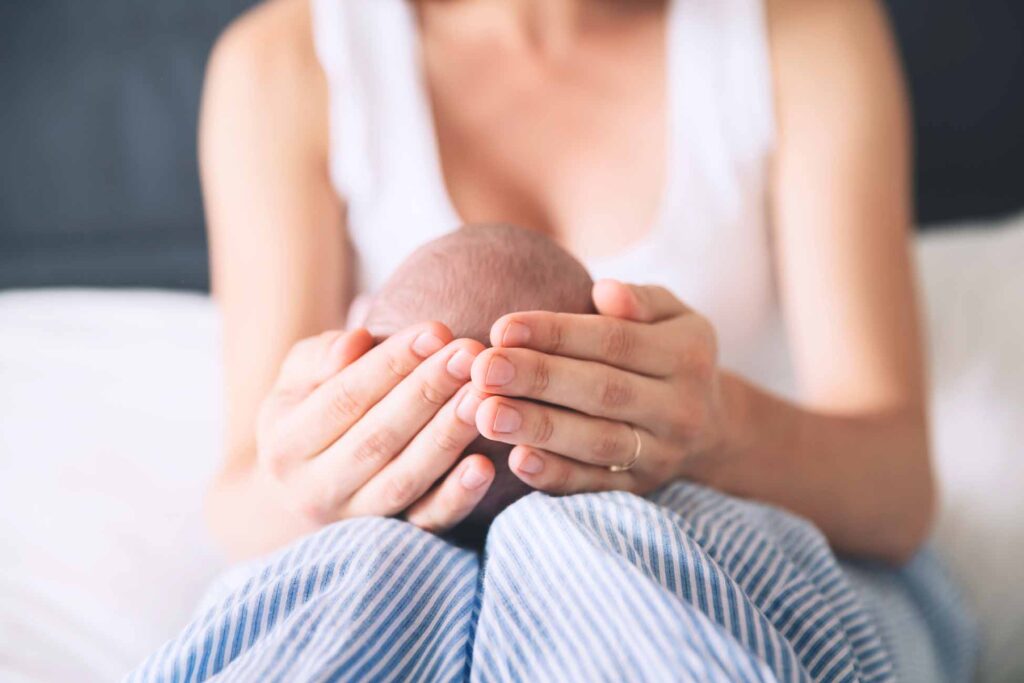
The first week after childbirth is a delicate period that demands special attention to nurturing your body and mind, so you can heal, give your newborn all the care and attention they need, and be fully present during this time of joy and discovery.
Here, we offer practical advice on how to prioritise self-care in the days after giving birth, so you are better able to cope with the physical and emotional effects and transition smoothly into motherhood.
Prioritising rest is paramount during the first week after childbirth. Your body undergoes significant changes, and allowing it adequate time to heal is crucial. Nap when your baby sleeps, and resist the urge to engage in strenuous activities. Give yourself the time to recover without pushing your physical limits.
Staying well-hydrated and nourished is fundamental for energy levels and overall recovery. Aim to eat balanced meals that combine fresh fruit, vegetables, lean proteins, and whole grains. Adequate hydration supports your body in the healing process and promotes overall wellbeing. For more on nutrition, head to the Nutrition collection.
Doing some light and gentle exercises, as advised by your healthcare provider, can help you to recover without straining your body. Pelvic floor exercises and walking are good choices to promote circulation and strengthen your body gradually. Listen to your body’s signals and avoid pushing yourself too hard during this initial phase.
Paying attention to perineal care is crucial for comfort and preventing complications. Keep the perineal area clean and dry. Never use a hair dryer or fan to dry the area, as this increases the risk of infection and may cause tissue damage. Ice packs can ease some of the discomfort you may feel in the first few days or weeks – this can be in the form of crushed ice, frozen peas or frozen gel pads.
Do not put an ice pack directly onto the skin, as this may cause painful ice burns. Instead, wrap it in a damp clean cloth or flannel. You can apply the ice pack for 5 minutes at a time and repeat 3 or 4 times a day. You may also find it helpful to use rubber rings to relieve the pressure of sitting on your perineum. However, try to avoid sitting for long periods of time (more than 30 minutes).
Paying attention to your emotional wellbeing is just as important as physical recovery during the postnatal period. Be mindful of your emotional health, and seek support from loved ones. Talk openly about your feelings and concerns, as this will allow them to support you more effectively. You may feel it’s necessary get professional help to navigate what can be an intensely emotional time.
The community midwife will contact you after you go home with your baby. If you need some support, you feel unwell or start bleeding heavily, please contact your maternity care provider. In an emergency, call 999 for an ambulance.
For more information on what to expect, please visit NICE—Postnatal care.