
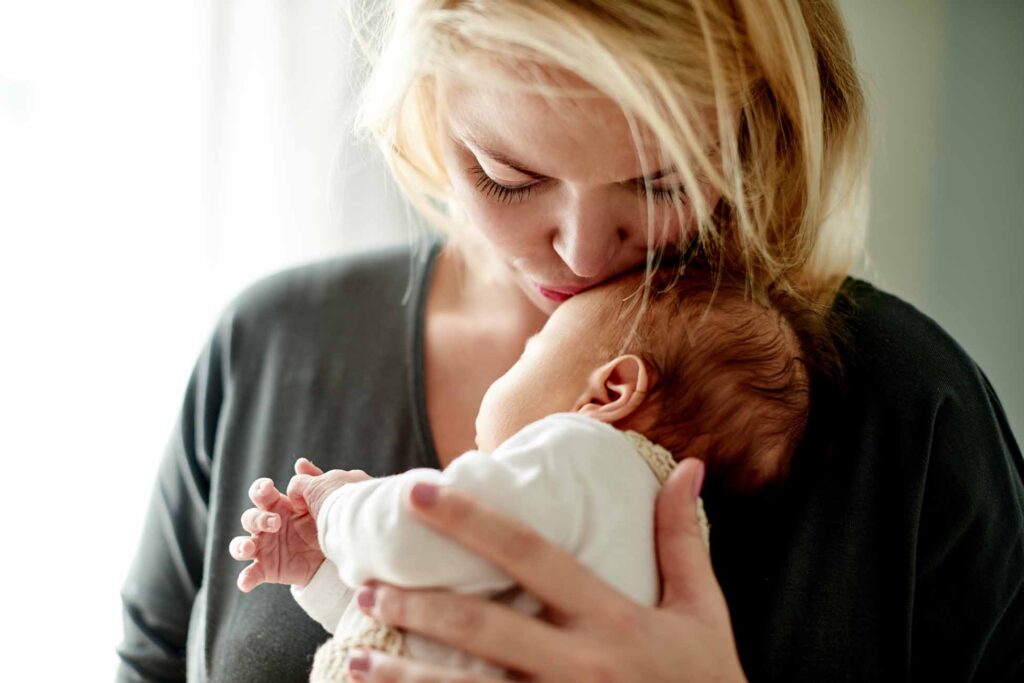
The first week postpartum is a critical period of physical change, and each woman’s body adjusts in its own unique way. By understanding these changes and approaching them with patience and self-compassion, you can set the foundation for a more positive postnatal healing experience.
Here, we describe physical events that you may experience in the first week after giving birth, how to manage them, and when to seek medical advice.
Following childbirth, the uterus undergoes a process called involution (shrinking), where it gradually returns to its pre-pregnancy size. Sometimes uterine contractions, often referred to as “afterpains”, are felt during breastfeeding because oxytocin is released then. (Oxytocin is the hormone that causes the contractions.) These should go away after roughly three days – meanwhile, you can take regular painkillers that your midwife will recommend.
However, if you are experiencing severe pain, make sure you tell your GP or midwife immediately.
Lochia is the discharge of blood, mucus, and uterine tissue after childbirth. Initially bright red, it becomes a lighter colour over time. This discharge can last for several weeks, and using absorbent pads is essential to manage hygiene.
Important: Using tampons before your 6-week postnatal check is not advisable, as it may increase the risk of infection. This is because there will be a healing site where the placenta was attached to the wall of your uterus, and you might also have tears or cuts in or around your vaginal area. Also, if you notice significant blood loss in large clots, please seek immediate medical advice.
In the first week post-birth, it’s typical for women to notice changes in vaginal smell as their bodies start the recovery process. Initially, a slightly earthy or metallic odour may be present, which is considered normal due to the presence of blood. As the week progresses, this odour may gradually diminish as the lochia discharge changes in colour and consistency. Frequent showers and wearing breathable cotton underwear can help to manage vaginal odour and make you feel more comfortable.
While a mild odour is expected, if you notice any foul or strong odours, particularly accompanied by other symptoms such as swelling, fever or abdominal pain, seek medical attention straight away. This may indicate an infection or other underlying issue requiring treatment.
In the first week, your breasts may become filled or swollen as milk production begins. This engorgement can lead to increased breast size, tenderness, and sensitivity. The areolas may also darken, and visible veins may appear due to increased blood flow. For information on breastfeeding and breast discharge, head to the Breast Health and Breastfeeding sections.
For those who experienced vaginal birth, the perineum – the area between the vagina and anus – may be sore and swollen. If there were tears or an episiotomy (a surgical cut to widen the vaginal opening), stitches may have been used for repair. Swelling and discomfort are common, and proper perineal care is crucial for healing. Read our article on perineal tear recovery in the Pelvic Health section for more information.
During pregnancy the body retains fluids and postpartum these will be gradually released. Some women experience significant weight loss in the first week as a result, although this process varies.
Hormonal shifts are significant during the postpartum period. The sudden drop in oestrogen and progesterone levels can contribute to mood swings, known as the “baby blues”. These emotional changes are normal – even so, pay attention to their intensity and duration. For more on this topic, head to the hormonal changes article in the Recovery and Healing section.
Abdominal muscles, stretched during pregnancy, begin to regain tone in the postpartum period. However, it takes time for the abdominal area to fully recover. Some women may experience a noticeable “pouch” due to muscle separation (diastasis recti). This can be addressed with targeted exercises. Head to the Recovery and Healing section to find out more.
Haemorrhoids, also known as piles, are a common occurrence after pregnancy and typically resolve within a few days. You can help this along by eating plenty of fresh fruit, vegetables, salad, wholegrain cereals and wholemeal bread. Drinking plenty of water makes it easier and less painful to pass bowel movements.
Avoid pushing or straining, as this can make haemorrhoids worse. If you experience significant discomfort, inform your midwife or GP. They can provide a soothing cream to alleviate haemorrhoid symptoms.
It’s very important to contact your midwife or GP if you experience any of these symptoms: